
An action tank for the democratisation of wealth
Can Incentives Help Boost Pensions for Informal Sector Workers in Latin America and the Caribbean?
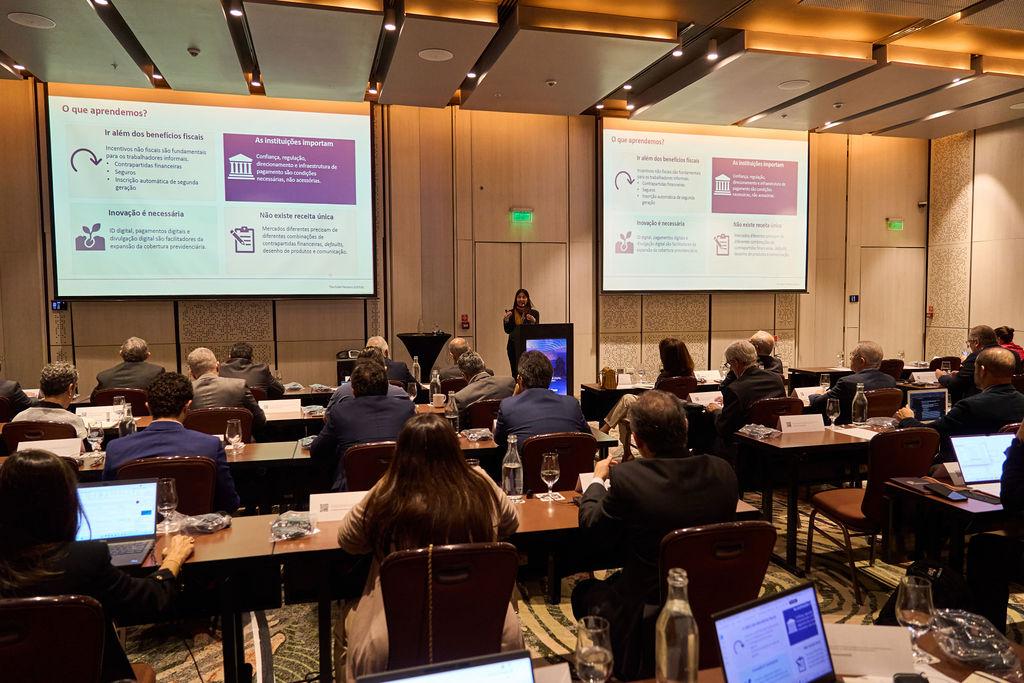
At the Coller Pensions Institute (CPI), we want to be part of the answer to this question. In early June, CPI participated in the Brazilian Association of Private Pensions (Abrapp) International Seminar in Bogotá, Colombia, where we presented our joint research with D3P Global “How incentives can boost pensions for informal sector workers” to an audience of leaders of Brazilian occupational pension funds and regional thought leaders. Later that same month, CPI also participated in the Caribbean Association of Pension Supervisors (CAPS) 2026 Annual Conference, where we shared insights on how behavioural economics and technological tools can incentivize retirement savings.
Latin America and the Caribbean are among the fastest-aging regions in the world. The inverse old-age dependency ratio—the number of working-age adults (15–64) for each person aged 65 or more—illustrates this trend. While in 1950 the region had around 17 working-age adults per older adult, by 2024 this ratio had fallen to less than 7 to 1. According to United Nations projections, by 2070 there will be fewer than 3 working-age adults for each older adult in the region.
Graph 1. Inverse dependency ratio and total fertility rate in Latin America and the Caribbean (1950-2100)
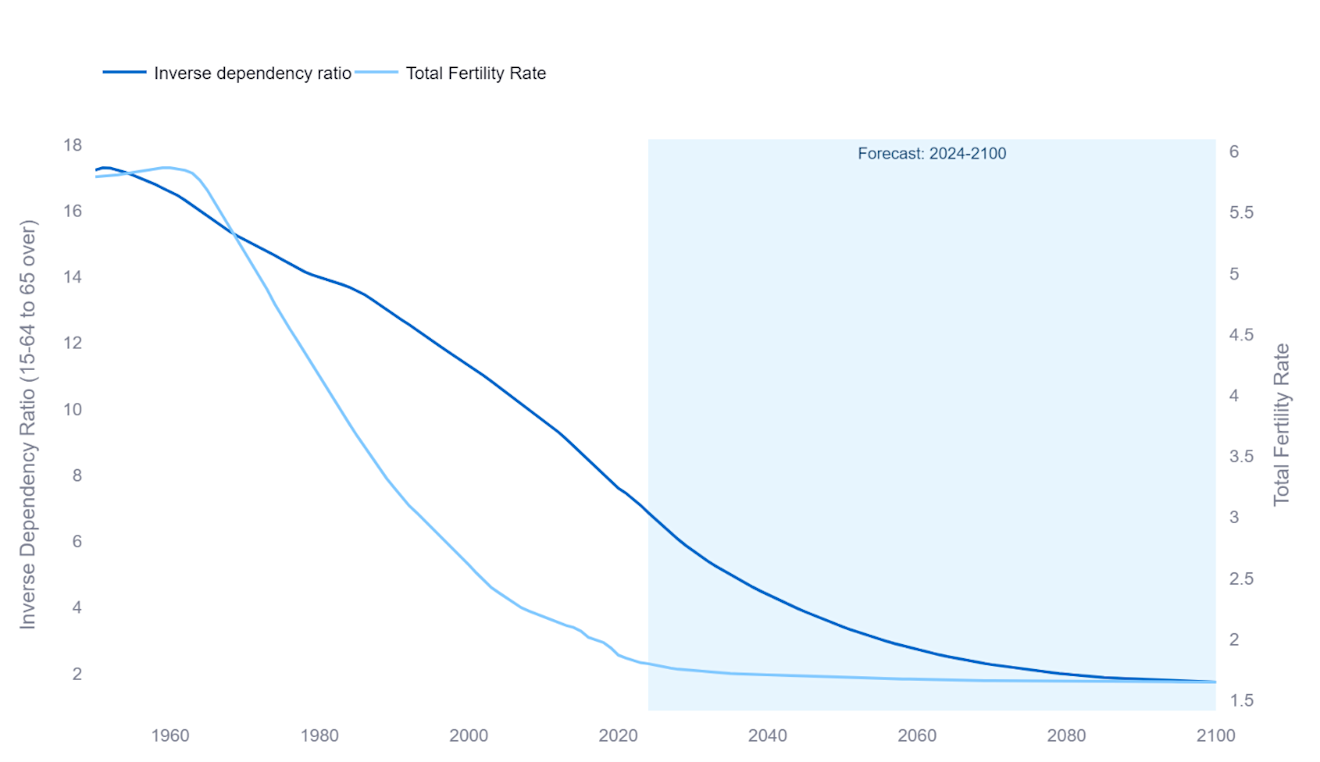
Source: Author based on United Nations data and projections.
This demographic transition—driven by declining fertility rates and increasing life expectancy—has clear implications for pension systems. Pay-as-you-go systems are already facing financial pressure due to reduced financing and rising liabilities, while savings-based systems must review parameters and adjust to higher longevity to ensure adequate pension benefits.
These challenges, however, often overshadow the significant pension inclusion gaps that persist in the region. In Latin America and the Caribbean, only 4 out of 10 workers contribute to a pension, and only 6 out of 10 older adults receive one in old age. The relatively higher coverage in retirement reflects the success of non-contributory programs implemented over the past two decades. While these programs extend coverage to vulnerable populations, they typically provide low benefits that are insufficient to guarantee a good quality of life in old age.
Low contributory pension coverage is largely driven by the persistence of informality. According to the Inter-American Development Bank, around 60% of employment in the region is informal, with significant variation across countries. While formal employment exceeds 70% of employment in Chile, Costa Rica, and Uruguay, it remains below 25% in countries such as Bolivia, Paraguay, and Peru. Informality is associated not only with lower-quality jobs but also with a lack of pension coverage. As a result, population ageing could translate into higher poverty rates unless these pension inclusion gaps are addressed in a timely and effective manner.
Graph 2. Percentage of workers contributing to a pension in Latin America and the Caribbean (2024 or latest year available)
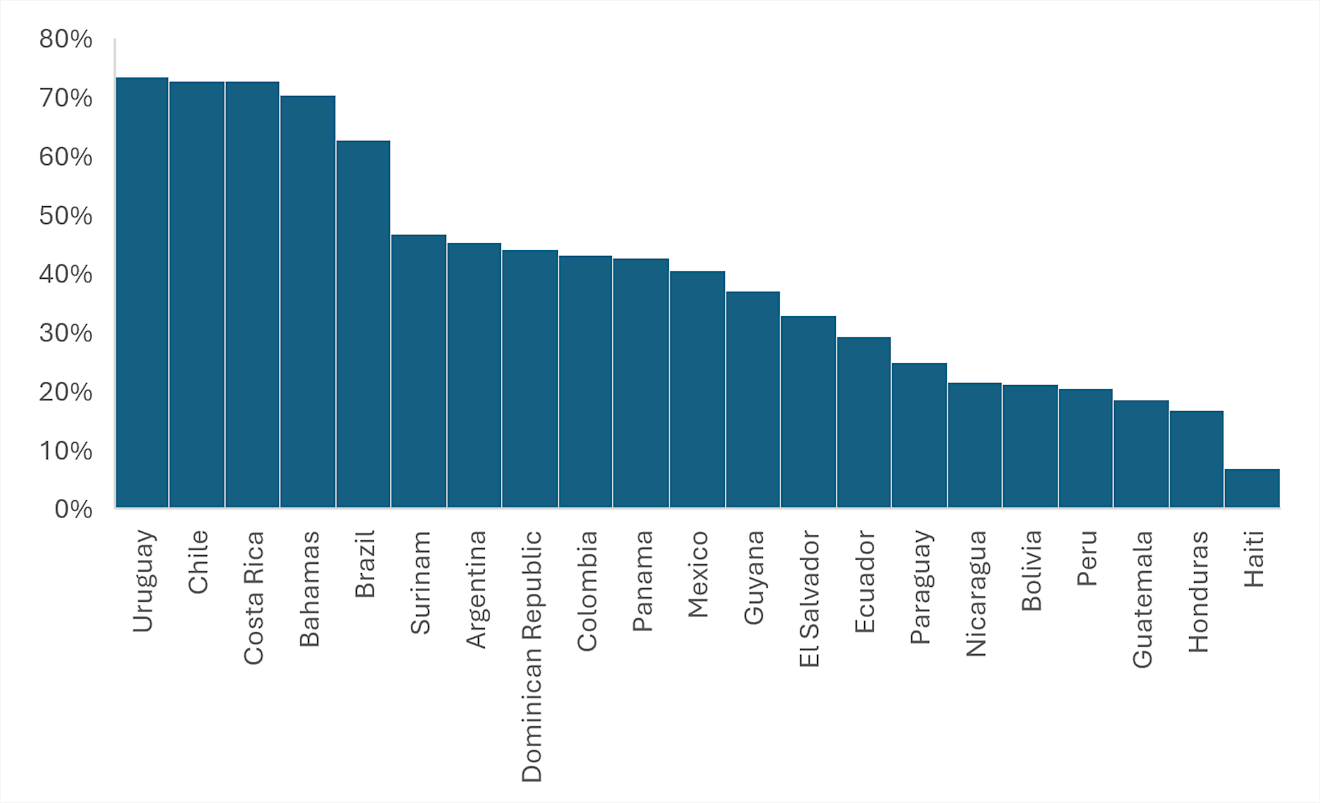
Source: Author based on Inter-American Development Bank data.
The Coller Pensions Institute is working with pension regulators and private-sector partners across the region to expand coverage to independent and informal workers. Building on our recent research and international experience in this area, we are partnering with key stakeholders to design and implement solutions that can make a meaningful difference in the lives of millions of informal workers in Latin America and the Caribbean.
Written by:

Dr. Carolina Cabrita Felix
Operations and Programme Manager
Sign up for news and updates
The Coller Pensions Institute is part of the Jeremy Coller Foundation