
An action tank for the democratisation of wealth
Expanding Pension Coverage in Africa
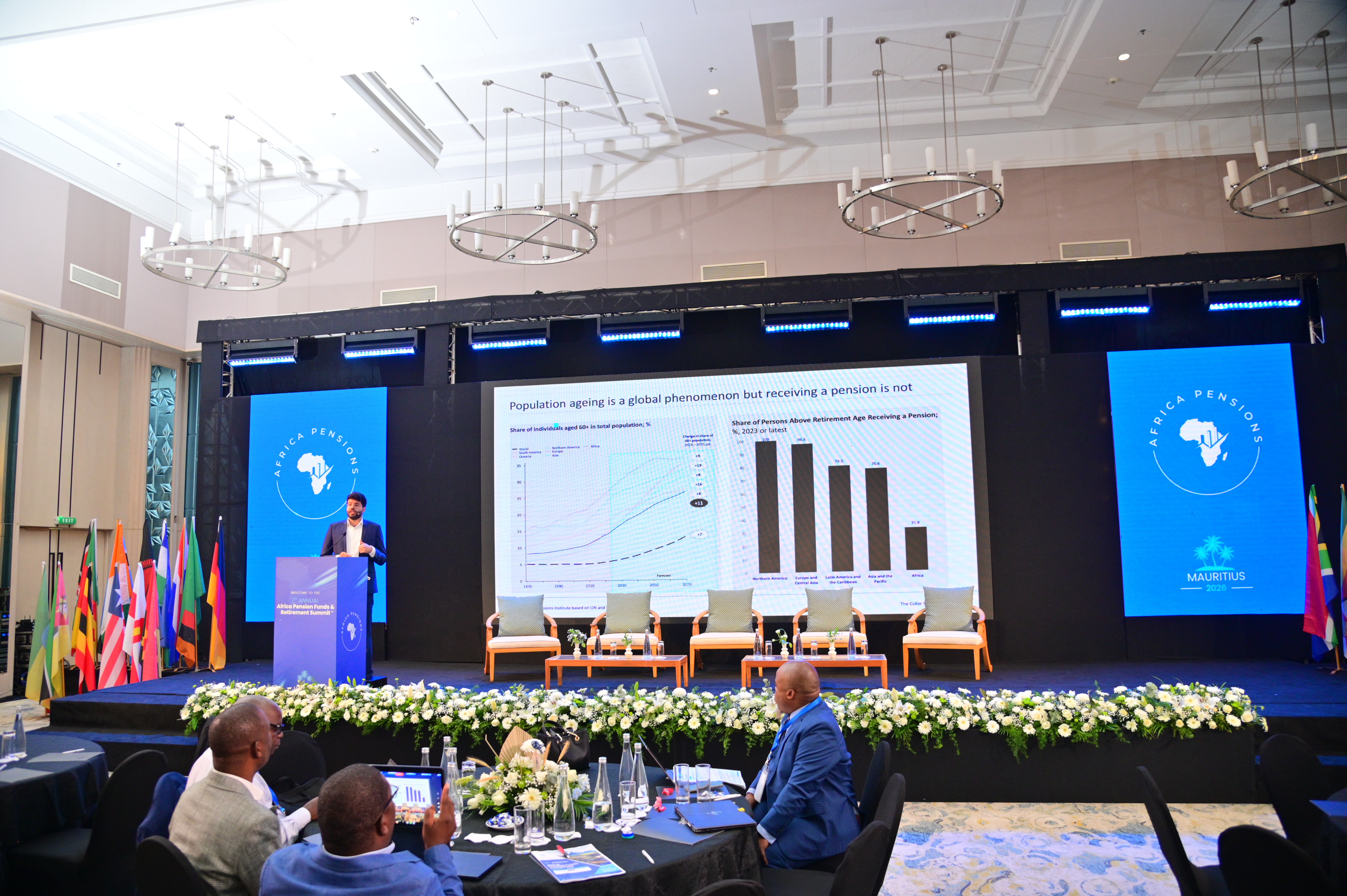
In June 2026, the Coller Pensions Institute participated in the 7th Annual Africa Pension Funds & Retirement Summit and presented its joint research with D3P Global How incentives can boost pensions for informal sector workers. This blog draws on insights and impressions from that conference.
The challenge to expand pension coverage to informal sector workers is particularly important in Africa and was a central theme of this conference - raised by representatives from the African pension industry, national authorities and national social security funds alike.
As illustrated in Figure 1, Africa is significantly behind other regions when it comes to how many older people can rely on the financial security of a pension. Only 32% of people above retirement age in Africa receive any pension, compared to over 75% on all other continents.
Figure 1: Share of persons above retirement age receiving a pension (2023 or latest year available)
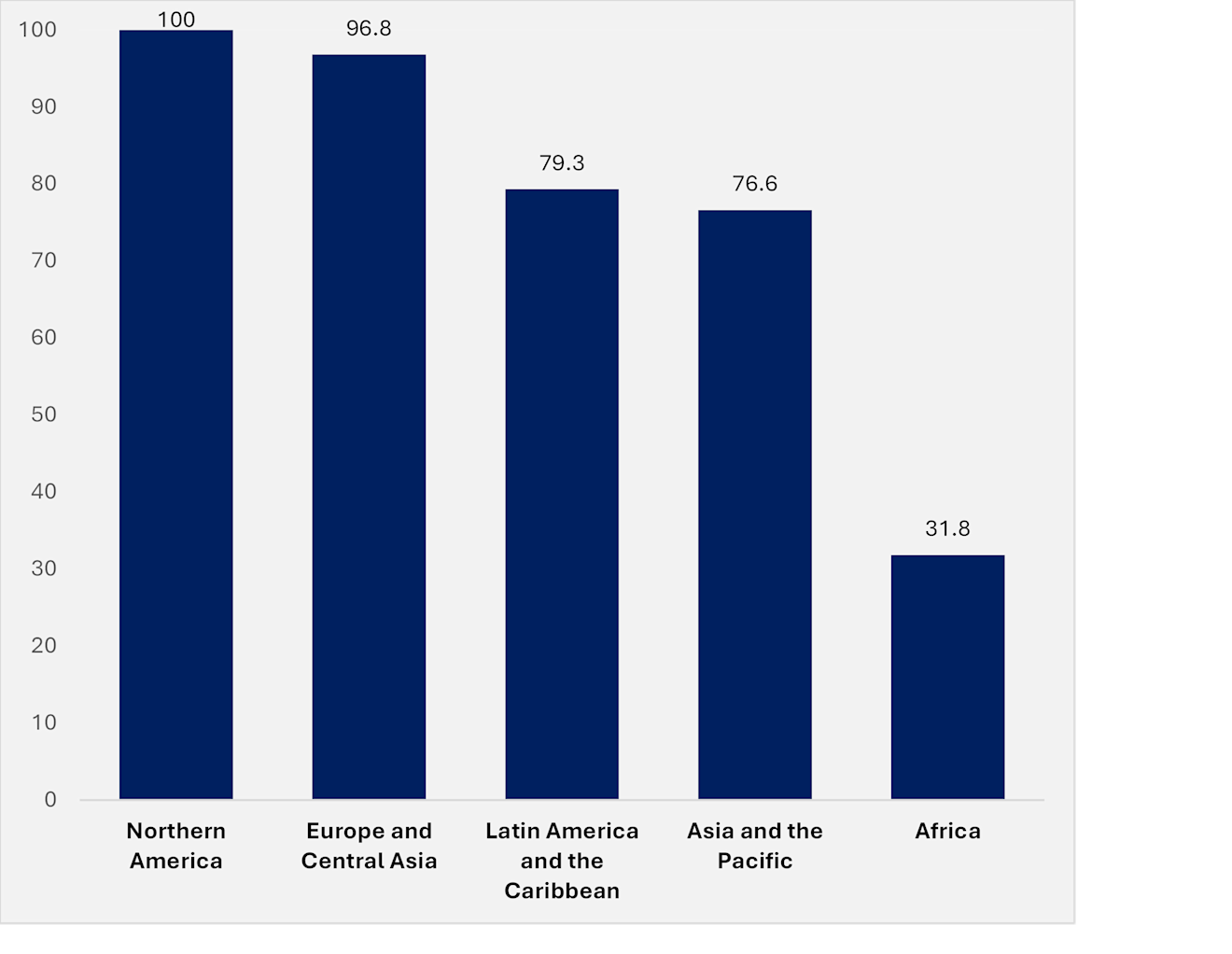
Source: Author based on ILO data.
The main reason African countries have struggled to expand pension coverage is the prevalence of informal work. The ILO estimates that 85% of employment on the continent is informal.
Expanding pension coverage offers two critically important benefits:
Benefit 1: Expanding pension coverage helps cope with ageing populations
While the average age in Africa is relatively young today, it is ageing fast. In 2025 there were still 15.5 people of working age for each person aged 65 and more, this number is projected to almost halve by 2070, according to UN data. Furthermore, the median age on the continent is projected to increase by 50% over the same time span, from 19 to 29 years old.
For comparison, in Europe, where ageing populations are a major topic in policy and public discourse, the median age is only projected to increase by 12% until 2050.
A median age of 29 represents a large working-age population. That is why it is important to design systems today, so that those workers who are able to save regularly for retirement have good structures to do so. The ILO estimates that today only 9.1% of the working age population in Africa contribute to a pension, and even more alarmingly, only 5.4% of women in that age bracket.
Expanding pension coverage will help African nations prevent this slow-burn problem today becoming a major crisis tomorrow.
Benefit 2: Expanding pension coverage can support capital market development
This point was made repeatedly throughout the conference. Expanding funded pension systems on the continent would help develop local capital markets and mobilise domestic resources.
By pooling individual savings in collective investment vehicles, pension funds can invest more efficiently than individual investors. Research has shown that institutional investors achieve higher returns than individual investors. Furthermore, a lot of savings are not invested at all, sometimes due to informal saving, or because cash is held in banks (as is the case in many EU countries too).
Funded pensions would mobilise these savings for financial markets. This can result in better returns for savers, and therefore higher pensions, as well as helping domestic financial infrastructure to develop and local capital markets to expand.
However, enabling conditions are crucial for these positive effects to be realised. A forthcoming CPI paper later this year will look at the link between funded pensions, capital market development and economic growth more closely.
Expanding pension coverage in Africa needs innovation
Expanding pension coverage in the context of a labour force with such a high level of informality presents unique challenges.
For formal workers, governments can mandate pension saving and enforce it (at least in most situations). When informality is high, mandating and enforcing are very difficult. Instead, workers need to choose to save. As our research has shown, pasting solutions that have worked in high-income countries in the past does not work for most African countries.
Instead, systems need to be designed with the needs of informal workers in mind. They need to be adapted to their diverse living situations.
This challenge lies at the heart of the Coller Pension Institute’s mission. We work towards implementable solutions to expand pension coverage.
Written by:

Dr. David Pinkus
Executive Director
Sign up for news and updates
The Coller Pensions Institute is part of the Jeremy Coller Foundation