
An action tank for the democratisation of wealth
A Thought for Pensions on the International Day for the Eradication of Poverty

The global effort to eradicate poverty has delivered encouraging progress. Access to electricity and the internet has expanded, and more than half of the world’s population is now covered by at least one form of social protection, an increase of 10 percentage points over the past decade. Yet, as the United Nations marks the International Day for the Eradication of Poverty, there are growing concerns that progress is stalling.
In 2026, around 10% of the global population, approximately 800 million people, still live in extreme poverty (live on less than US$3 per day). This month, the UN General Assembly called for renewed efforts to close the annual US$4 trillion financing gap for the Sustainable Development Goals, against a backdrop of declining global aid budgets.
This context invites a closer look at the role of pensions in poverty reduction, not only as a source of income in later life, but also as part of the broader development architecture needed to tackle poverty at scale.
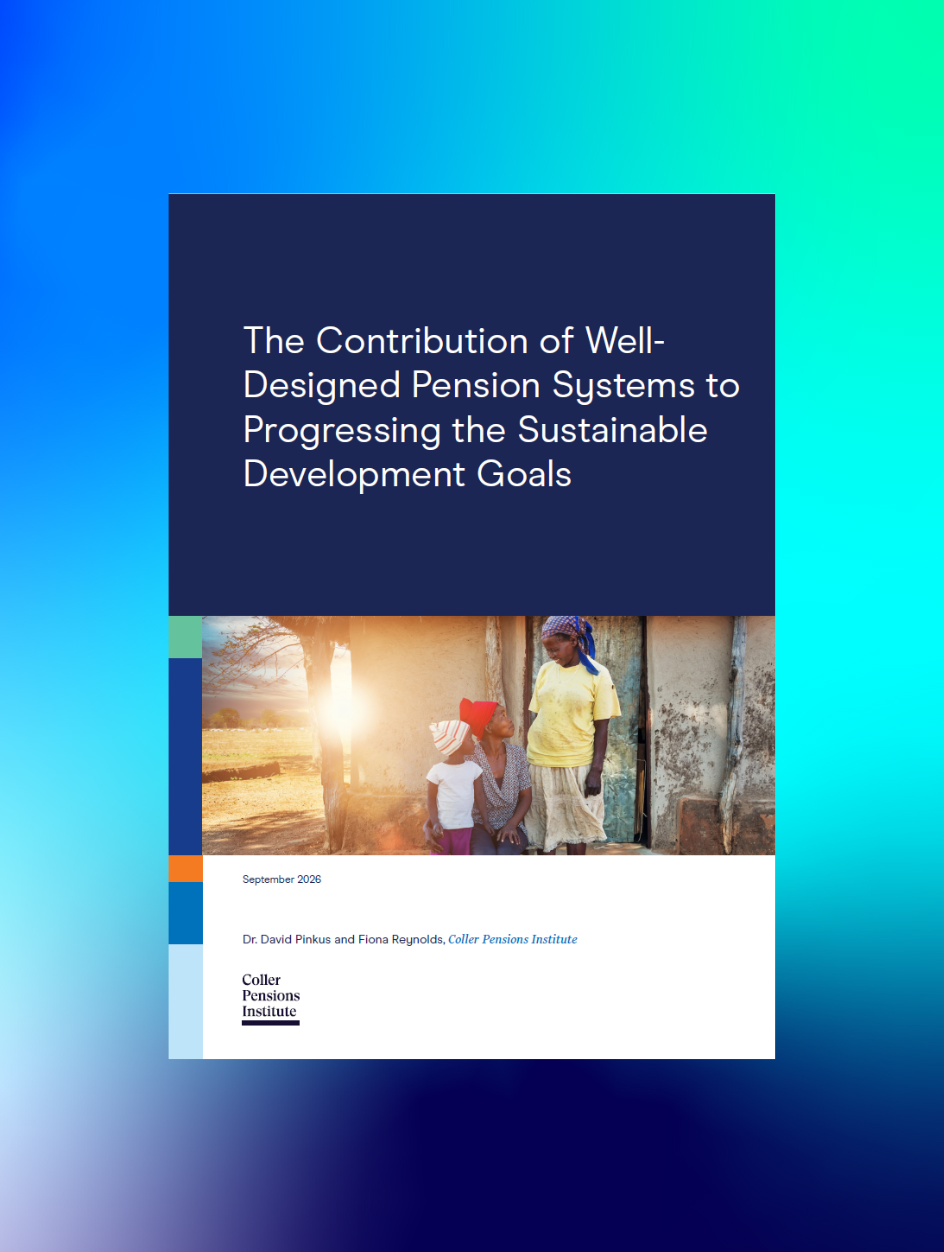
We explored this issue in detail in our recent White Paper, The Contribution of Well-Designed Pension Systems to Progressing the Sustainable Development Goals. This article highlights some of its central findings.
Reducing poverty in old age
The most direct way pension systems reduce poverty is by providing income in later life. Yet, according to the International Labour Organization (ILO), more than half of the world’s older people receive no pension, with many of those excluded living in low- and middle-income countries (LMICs).
Figure 1: Percentage (%) of older people receiving a pension
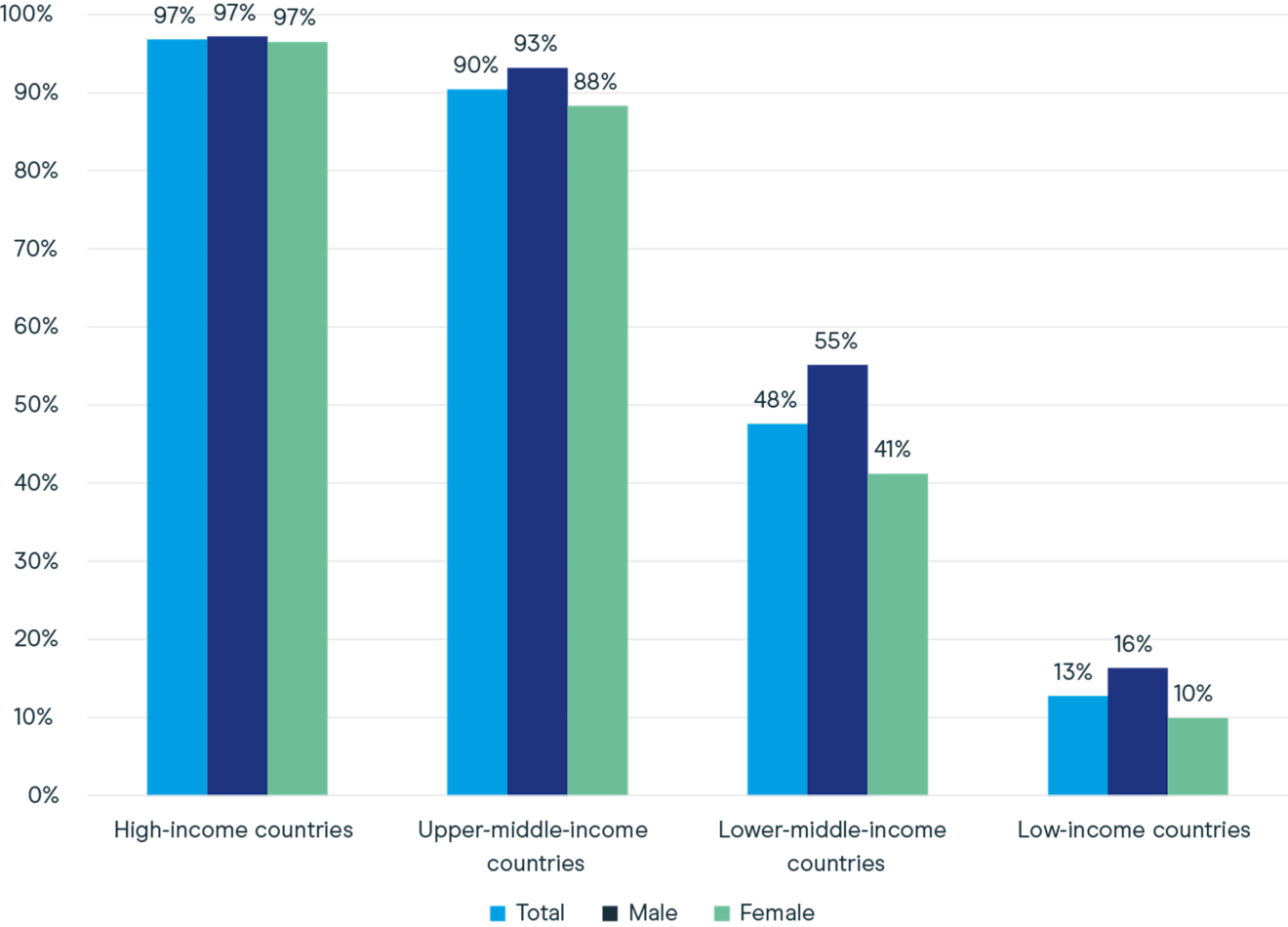
Source: ILO data.
Several trends suggest that pensions will become even more important in protecting people from poverty in old age. First, the global population aged 65 and over is projected to more than double by 2070. Second, in many LMICs, multigenerational living arrangements and the associated financial and care support for older people are becoming less common, particularly in rural areas. At the same time, falling fertility rates mean that fewer children may be available to provide family support.
Together, population ageing, changing household structures and declining fertility strengthen the case for expanding access to reliable pension income and enabling more people to save for retirement.
Beyond income in later life
Well-designed pension policy can also contribute to poverty reduction through wider economic channels. Funded pension systems create pools of long-term domestic capital that can support financial-market development. Over time, this capital can help finance productive investment, job creation and economic growth (SDG 8), while strengthening the market conditions needed to attract investment in infrastructure (SDG 9). These effects can address important drivers of poverty, including unemployment and limited access to essential infrastructure, across the wider population.
Botswana offers a useful example. Following the introduction of mandatory occupational pension schemes in 2001, retirement savings grew rapidly. Research by the International Monetary Fund identifies the retirement-funds sector as an important contributor to financial-sector development, economic diversification and infrastructure investment. The 2024/25 Annual Report of the Botswana Public Officers Pension Fund, the country’s largest pension fund, similarly notes that investment in infrastructure and digitalisation supported domestic activity, particularly in urban centres. This illustrates how pension assets can contribute to an economy’s transition beyond a historic reliance on diamond mining.
Some countries have also adopted policies that direct pension investment towards underserved communities. In South Africa, the Rural and Township Development Fund seeks to stimulate economic activity in disadvantaged areas. The fund is run by the state-owned Public Investment Corporation, which manages assets on behalf of several public-sector funds, including the Government Employees Pension Fund. Initiatives of this kind show how institutional capital can be mobilised with a deliberate focus on inclusive local development.
Fighting poverty through pensions
As discussions about the post-2030 development framework begin, the contribution of pension systems to poverty reduction deserves greater attention. Pension income remains essential to preventing poverty in old age. But the development community should also recognise the broader contribution that well-designed pension systems can make to sustainable development, through long-term investment, stronger financial markets, better infrastructure and more inclusive economic growth.
Pensions cannot substitute for aid, public investment or sound social policy. However, when coverage, governance and investment frameworks are well designed, they can become a powerful complement to each, protecting individuals in later life while supporting the conditions for shared prosperity.
Read the full Whitepaper: The Contribution of Well-Designed Pension Systems to Progressing the Sustainable Development Goals
Written by:

Dr. Carolina Cabrita Felix
Operations and Programme Manager
Sign up for news and updates
The Coller Pensions Institute is part of the Jeremy Coller Foundation