
An action tank for the democratisation of wealth
Insights from Bangkok: Pensions, Jobs and Development

In October 2026, the Coller Pensions Institute attended the 2026 IMF-World Bank Annual Meetings in Bangkok. This blog draws on insights and impressions from that event.
As in previous years, one of the key themes of the Annual Meetings (AM) was job creation for the present, but also for future generations. One figure highlighted repeatedly was that over the next 10-15 years, 1.2 billion people are projected to reach working age in low- and middle-income countries (LMICs). Current trajectories, however, only estimate the creation of 420 million jobs over that timeframe. The gap is significant.
Therefore, demographics were an important underlying factor for many discussions at the AM. Bangkok provided a fitting setting for these discussions, as Thailand is experiencing one of the fastest demographic transitions in the world.
How to close the financing and job creation gaps was a recurring question in Bangkok. The need to mobilise and catalyse private capital, foreign and domestic, for development took centre stage across the week.
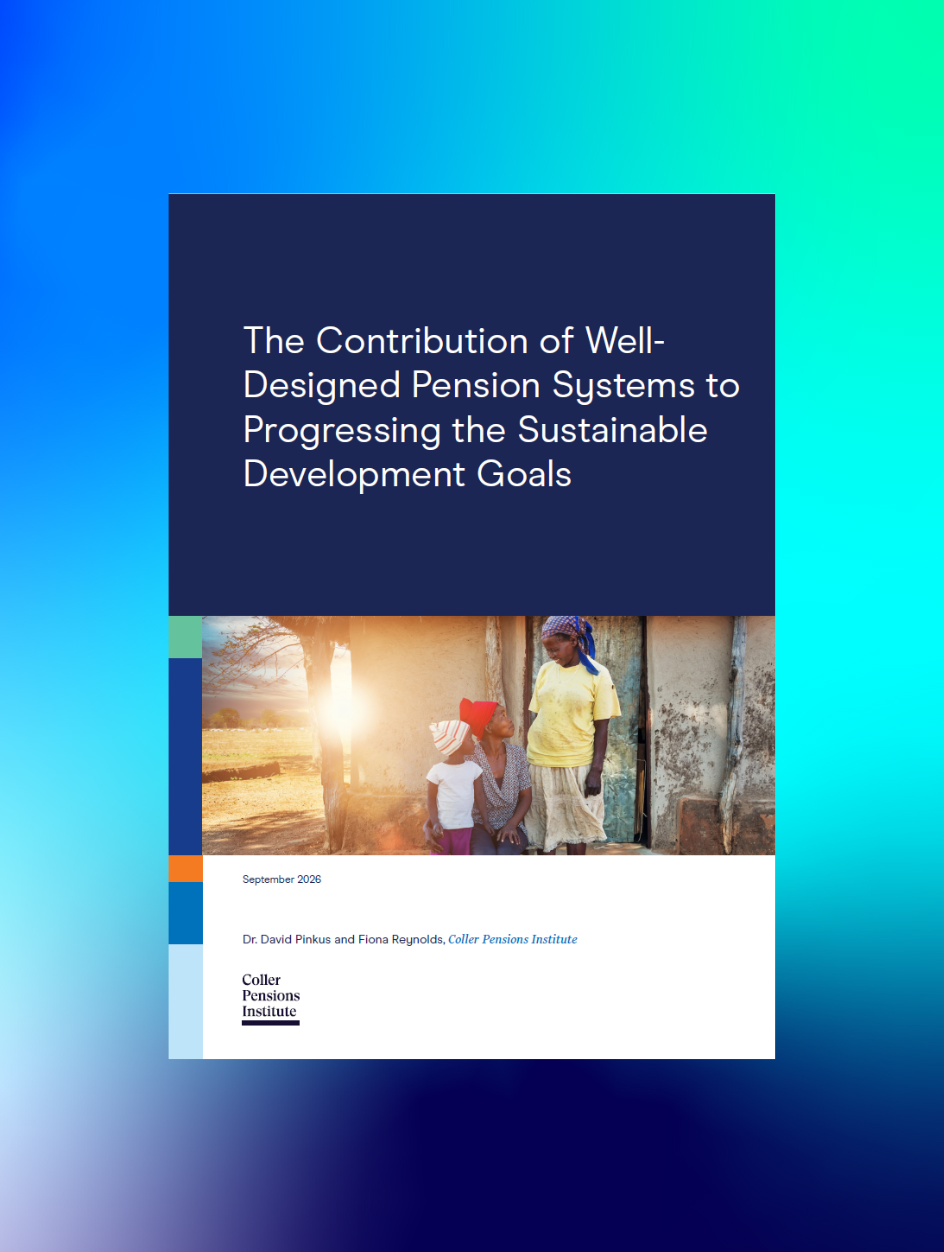
This is a very timely discussion, and we believe that pension systems can play a significant role in that process. CPI’s recent paper published last month outlines several ways that better pension policy can support global development.
Pension savings can support economic growth
Thinking about job creation, it is not only important to create more jobs for a growing working-age population in developing countries, but also to ensure that these are quality jobs. Social security, including health coverage, pension coverage and more, should be part of the definition of quality.
However, increased pension participation is not only a potential consequence of job creation; pension capital could also help create jobs.
As outlined in a recent CPI publication, under the right conditions, well-designed pension systems can mobilise savings and create a pool of long-term, domestic capital over time. If invested prudently and in productive projects, pension capital can have positive effects on the wider economy. For example, my previous research has found that pension fund investment in a firm is associated with the firm’s productivity and innovative activities.
In Bangkok, I participated in a World Bank Knowledge Café panel discussing the factors behind domestic investment by pension funds (the recording is available here). My main point was that pension savings need to be invested with the interests of the saver always at the centre of investment decisions. However, under the right conditions, including an appropriate governance and regulatory framework, pension fund investment can support economic development.
The time is now to expand pension coverage
Yet for pension capital to support economic development, a country first needs to mobilise savings into pension accounts.
The pool of capital is already substantial. For example, the Africa Finance Corporation estimates that pension funds in Africa hold over USD 600 billion in assets under management. Expanding pension coverage today has the potential to grow this pool substantially. Currently, little more than just 7% of the labour force in low-income countries contributes to a pension. Raising this share significantly, combined with the growing working-age populations mentioned at the beginning of this blog, has the potential to mobilise significant capital.
That is why the time to improve pension systems in developing countries is now. To expand pension coverage, systems need to respond to the realities on the ground, and particularly to attract informal sector workers, who represent the majority of the workforce in LMICs, and who are currently largely excluded from pension systems.
Conclusion: Pensions combine the jobs and ageing agendas
Pension policy can help countries respond to several challenges highlighted at this year’s Annual Meetings.
With increased emphasis on mobilising private capital for development and growing working-age populations in LMICs, good pension policy has the potential to increasingly support the development agenda. However, for pension savings to support economic development, a number of conditions need to be in place. That relationship will be the subject of an upcoming paper from CPI.
Furthermore, improving pension coverage in developing countries is necessary for them to prepare for population ageing in the long term. If pension coverage rates are not improved, there is an increasing risk of widespread old-age poverty in the future.
Ensuring that pensions contribute to addressing both the jobs and ageing challenges is a complex task, and there is no one-size-fits-all solution. Conditions need to be evaluated, and solutions developed in a country-specific manner. With job creation at the forefront of this year's IMF–World Bank Annual Meetings, there is an opportunity to recognise pension policy not only as a tool for protecting people in old age, but also as an integral part of the broader economic development agenda.
Published on Wednesday, 21 October 2026
Written by:

Dr. David Pinkus
Executive Director
Sign up for news and updates
The Coller Pensions Institute is part of the Jeremy Coller Foundation